Advisory ID: HALTDOS-ADV-2026-1003
Published: November 19, 2026
Severity: Critical (CVSS 4.0: 9.2)
Target Vulnerability: CVE-2026-114938 (OpenJDK HotSpot AVX-512 Base64 Decoder)
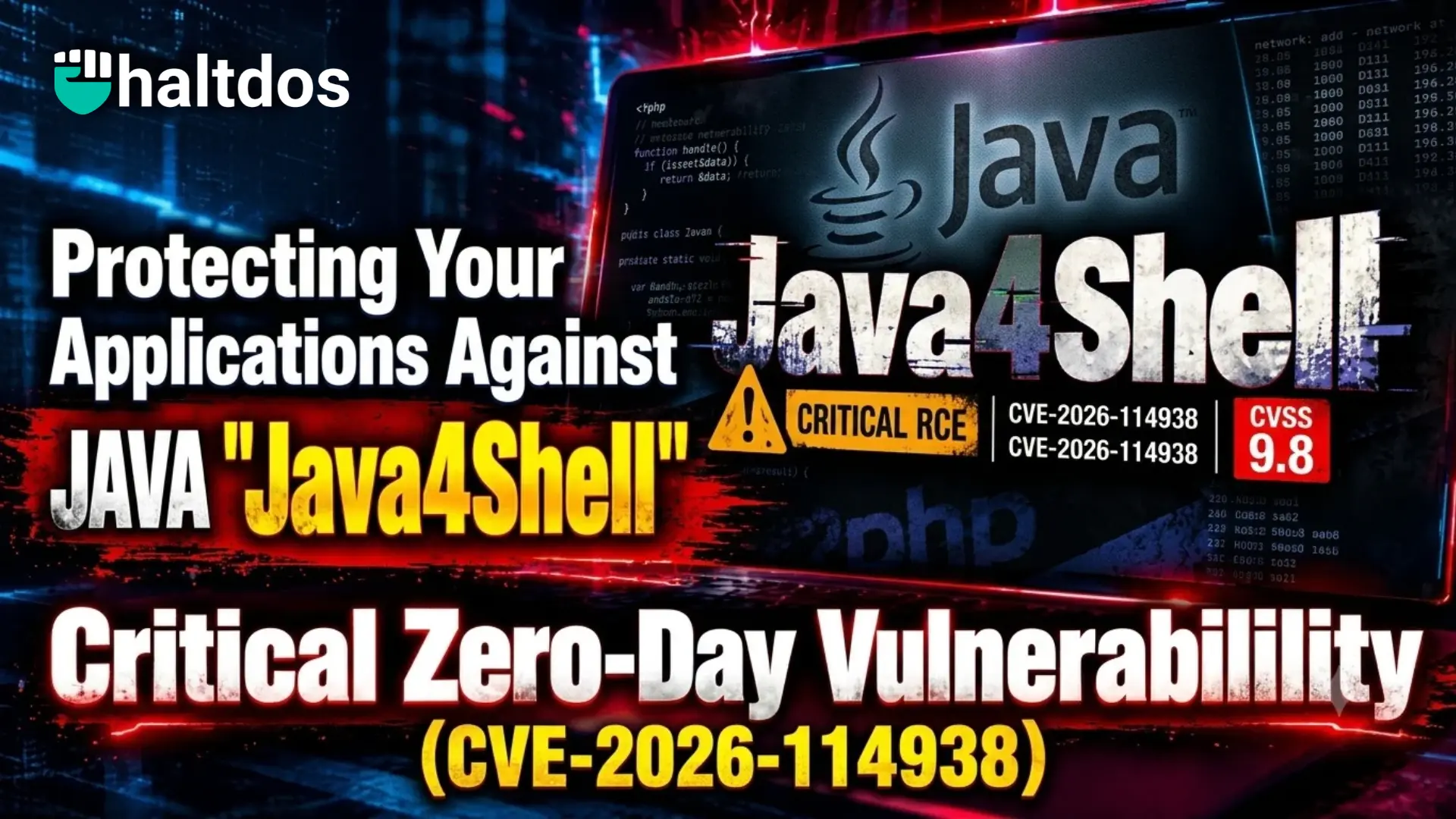
A critical memory-corruption vulnerability, tracked as CVE-2026-114938 and dubbed “Java4Shell,” has been identified in the OpenJDK HotSpot Java Virtual Machine (JVM). With a CVSS 4.0 score of 9.2, this flaw allows remote, unauthenticated attackers to execute arbitrary code on vulnerable Java servers.
To protect enterprise workloads immediately, the Haltdos Threat Intelligence Team has released dedicated Web Application Firewall (WAF) detection and blocking signatures.
Understanding the Vulnerability (CVE-2026-114938)
The vulnerability resides in the hand-written x86-64 assembly that OpenJDK HotSpot uses to accelerate Base64 decoding through AVX-512 VBMI instructions.
During runtime, the C2 Just-In-Time (JIT) compiler replaces Base64$Decoder.decodeBlock with an optimized AVX-512 VBMI routine that bypasses standard Java array bounds checks. When a Java application decodes untrusted input using java.util.Base64, an attacker can send a specially crafted, malformed Base64 string—such as padding characters (=) followed by additional data. This triggers an out-of-bounds heap write past the end of the destination buffer, leading to heap memory corruption and potential Remote Code Execution (RCE).
| Metric | Details |
| CVE ID | CVE-2026-114938 |
| Vulnerability Type | Out-of-bounds heap write in AVX-512 Base64 decoding intrinsic |
| Attack Vector | Remote, unauthenticated via malformed Base64 input |
| Impact | Remote Code Execution (RCE) / Heap Memory Corruption |
Affected Systems and Environments
Organizations running Java workloads should verify their environments against the following criteria:
- Java Versions: Java SE 17.0.6 and later, including Java 21, 25, and 27 builds released prior to the November 17, 2026 update.
- Hardware Architecture: Hosts running on x86-64 CPUs with AVX-512 VBMI support.
- Unaffected Platforms: ARM64 and AArch64 JVMs are not impacted by this vulnerability.
Immediate Mitigation with Haltdos WAF
Patching production Java runtimes across complex enterprise architectures takes time. To provide immediate virtual patching, Haltdos Web Application Firewall (WAF) customers can deploy three new signatures engineered to detect and block Java4Shell exploit attempts:
- Signature ID 005067004: Detects Java4Shell malformed Base64 padding in HTTP headers.
- Signature ID 005067005: Detects Java4Shell malformed Base64 padding in request parameters.
- Signature ID 005067006: Detects Java4Shell malformed Base64 padding in the request body.
When enabled in Block Mode, these signatures inspect inbound traffic in real time, identify payload patterns designed to trigger the memory corruption primitive, and terminate malicious requests before they ever reach backend Java application servers.
Recommended Next Steps
- Enable WAF Signatures Immediately: Confirm that rules 005067004, 005067005, and 005067006 are active and configured to Block Mode across all Haltdos WAF deployment profiles protecting Java workloads.
- Patch Java Runtimes: Schedule updates for underlying Java SE / OpenJDK installations to patched builds released on or after November 17, 2026.
Need Assistance?
Haltdos Technical Support is ready to help you verify signature updates, configure custom security policies, and tune rules to prevent false positives.
For direct assistance enabling signatures 005067004, 005067005, and 005067006, contact our team at support@haltdos.com or call 18001202394.